Kaul - celebrated in the Melanau month of Pengejin to thank the Ipok (spirits/guardians) for a bountiful year past and a prayer for a good year ahead.
The Melanaus belief is animistic and they believe that the world is protected and guarded by the various spirits, such as Ipok Guun (the guardian of the jungle), Ipok Talun (forest), Ipok Sungai (rivers), Ipok Pangai (wind), Ipok Daat (sea) and many more.
During this time, they would honour them for what they were given for the year and ask them for their good will for the coming year. They would sing their praises and thank them for the harvest given to them in the past and pray that they would grant them protection and give them a bountiful harvest in the year to come.
Pada hari ini 19 Januari 2013, remulah Augustine Anyub bin Kusau, bekas Bapa Kaul, telah selamat dikebumikan di tanah perkuburan Kristian Katholik Jalan Oya Mukah.
Augustine Anyub bin Kusau (20.08.1932-16.1.2013)
Remulah Augustine Anyub bin Kusau lahir pada 20 Ogos 1932 telah meninggal dunia pada 16 Januari 2013 pada umur 80 tahun.
Menyediakan persembahan kaul dalam Serahang
Pemergian remulah bukan tanda berakhirnya warisan melanau, tetapi remulah meninggalkan pewaris-pewaris muda yang bakal melestarikan adat dam warisan melanau yang akan berkembang seiring dengan peredaran masa yang senantiasa lurus dengan arusnya yang deras.
Most ancient societies needed a secure environment for the perpetuation of the species,a system of rules to handle the granting of property rights, and the protection of bloodlines. The institution of marriage handled these needs.
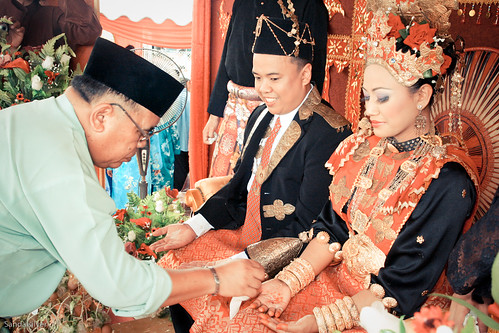
Amongst the Melanaus, there is a system of rank and every person belongs to a certain rank or 'adet basa'. A marriage within the same rank is called Sama Gara. In addition Sida adet is a marriage across rank boundary.
The preferred marriage is with a second cousin of any kind, provided it was not across a rank boundary.
Tanda Tuneang ( Bethrothal gift):
All Photos are byEduine Kusai
Amongst the Melanaus, there is a system of rank and every person belongs to a certain rank or 'adet basa'. A marriage within the same rank is called Sama Gara. In addition Sida adet is a marriage across rank boundary.
The preferred marriage is with a second cousin of any kind, provided it was not across a rank boundary.
All Photos are byEduine Kusai
Amongst the Melanaus, there is a system of rank and every person belongs to a certain rank or 'adet basa'. A marriage within the same rank is called Sama Gara. In addition Sida adet is a marriage across rank boundary.
The preferred marriage is with a second cousin of any kind, provided it was not across a rank boundary.
Tanda Tuneang ( Bethrothal gift):
All Photos are byEduine Kusai
Before starting the feast of Kaul, a Serahang must be prepared. Serahang is a flat round offering basket raised on a 7 feet bamboo pole. It is made of bulok tedieng, semat, nypa leaves, daun iseng and daun tigoh. Serahang means " to offer" or "to surrender" and serves as offering basket for Ipok ( Spirits). The offerings are:
The Father of Kaul will start the ceremony. He sings prayer to all "Ipok" (Spirits) while holding a bowl of Beraih Kunieng ( Uncooked yellow Rice). The Prayer goes:
Oi kelou Ipok Ipok Alud Ipok Daya Ipok Wab Ipok La-an Ipok Bau Ipok Dibak Ipok Jakak Ipok Pegak Ipok Tanak Ipok Sungai Ipok Li-éak Ipok Telouk Ipok Lidouk Ipok Jalan Ipok Takan
Ipok Ipok Keang sigeang mata linga kelou Ipok
Itoulah melou sou aneak Menibah kelou sama-sama Bak Keman Bak Pamen
O ye Ipok Ipok of the sea Ipok of the land Ipok of the west Ipok of the east Ipok in high above Ipok at down under Ipok of docks Ipok of river bed Ipok of the earth Ipok of the river Ipok of forest puddle Ipok of the Gulf Ipok of river rill Ipok of the road Ipok of places
Ipok Ipok Open your eyes, Lend us your ears O Ipok
Here we are your children Welcoming You for Festivity for Feasting
Then the Father of Kaul would scatter the yellow uncooked rice towards the villagers. In the same time he would continue the Prayer:
Melou menyabek diak gak kelou Ipok
Bless us O Ipok
Bak umur selamet sou aneak nou
Bless us with longevitiy
Menyabek rejeki murak gak melou aneak nou
Grant us, your children a bountiful life
Neh Muneh
in days to come
Inou ji wak meseang wak kureang nejaga
Protect us from hindrance and shortcoming
Wak jaet wéak
Deliver us from evil
Tuluong nou menyusuh jauk
Banish it far away
Kemanlah telou sama-sama Telou gitou lau itou
Let us feast together with you here today
After that the Father of Kaul would ask permission from the A-Metahei ( Aristrocrats) to begin the feast. After the feast the Serahang is placed on a riverbank while the Bapa Kaul( Father of Kaul ) would sing mantras to invoke the spirits and pours water over the offerings. The Serahang will be placed on the right side of the river mouth or on a sacred place which is called "Mesin" in melanau.
At birth a Melanau was placed in a rank category called "basa" or "Pakat", which was that of his father. Relationship between the ranks was formally laid down in the "Adet" ( Law) and a breach of rank rules was an act of disrespect "Tulah" and incurred civil and supernatural penalties.
“Culture is the sum of all the forms of art, of love, and of thought, which, in the coarse or centuries, have enabled man to be less enslaved”- Andre Malraux
Throughout the history of religions and cultures, objects used in cults, rituals, and sacred ceremonies have almost always been of both utilitarian and symbolic natures. Ceremonial and ritualistic objects have been utilized as a means for establishing or maintaining communication between the sacred (the transcendent, or supernatural, realm) and the profane (the realm of time, space, and cause and effect).
God, who has given the world to men in common, has also given them reason to make use of it to the best advantage of life, and convenience. The earth, and all that is therein, is given to men for the support and comfort of their being. And all the fruits it naturally produces, and beasts it feeds, are for mankind in common, as they are produced by the spontaneous hand of nature. The Nature on the other hand is guarded and protected by the Spirits. Without the Spirits the nature will be chaotic and human will face difficult time like famine, drought or floods. Hence it is out of respect and gratitude for the Spirits and God, the melanau must celebrate Kaul.
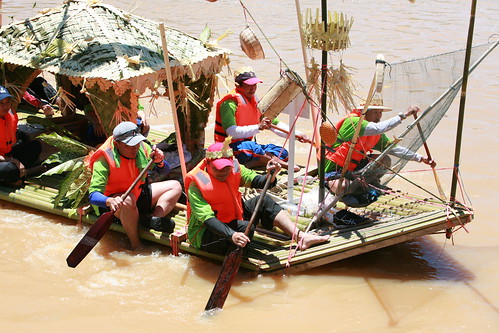
Photo: Decorative boat carrying the offering basket (Seraheang) by Si Mata Kecik
Image by abbybiha: Seraheing- Offering Basket during Kaul festival. New Year and the Month of Taboo
January 1st is the start or advent of a new year for those people who follow the Gregorian calendar. It marks the end of one year and the start of the next year and is the day on which the year count is incremented.
At the mouth of the river (Kala) and before entering the land of the dead, a Bedua (Soul) must first seek permission from the guardian called Balou Adet.