
Showing posts with label Info. Show all posts
Showing posts with label Info. Show all posts
Saturday, June 16, 2012
Sunday, November 6, 2011
The Facts about Sarawak

Sometimes we stumble upon interesting documents. Today I found a very historic document that is important to all sarawakians.
Please read and understand it first and share this with everyone. This is a very important part of our history.
Document and Photo Source: Brooke Heritage Trust
Tuesday, September 20, 2011
Happy Sarawak Day!

On the 24 th September 2011 Sarawak will celebrate her 170th birthday. Let us celebrate this day to remind us how lucky we are born as Sarawakian and living harmoniuosly with rythmic cultures and heritage :)
Kindly educate any Sarawakians you know to also remember and commemorate this date in spirit if not in fact. Just as before Creation, the Spirit was first, so perhaps in future, before the reality comes, the date must start to be commemorated in spirit first.
Sunday, August 28, 2011
Happy Eid Mubarak!
When my arms can't reach people close to my heart.
I always hug them with my prayers.
May allahs peace be with you.
A very happy eid mubarak to you
Learn Melanau wish a very happy and peaceful Eid Mubarak to
all Muslims Brothers And Sisters around the World.
May this year’s Eid give you,
All the happiness and,
Joy of this world and,
Hope that the blessing,
Of the AL-Mighty be with you all the time, Ameen.
Saturday, July 30, 2011
Ramadan Kareem

Dear Readers,
May the light that we celebrate at Ramadan
show us the way and lead us together on the
path of peace and social harmony
Thursday, July 14, 2011
The Original Malaysia Agreement ( Full text)
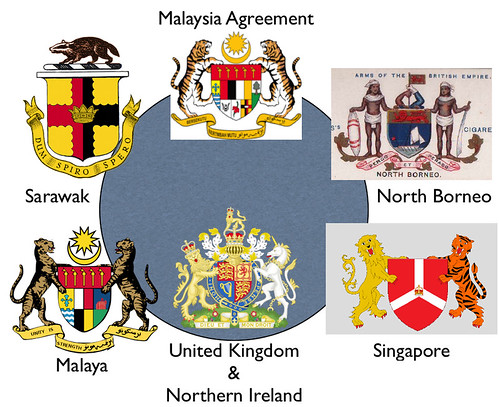
Dear Readers,
Sometimes we stumble upon interesting documents. Today I found a very historic document that is crucial to the formation of Malaysia i.e. The Malaysia Agreement. In this agreement include the 20 point agreement of Sabah and the 18 points agreement of Sarawak.
Wednesday, June 8, 2011
Learn Melanau & Melanau Picture Dictionary is now going mobile!

Learn Melanau is happy to say that our website is now compatible with mobile phone's browsers like iPhone4 , iPod touch, Android, Palm Pre, Samsung touch and BlackBerry Storm/Torch mobile devices. Now you can learn melanau anywhere at anytime XD
You just need to type the address of this blog on our mobile browser and "yen ji siyen":p
Website Learn Melanau type: www.bit.ly/learnmelanau
Website Melanau Dictionary type: www.bit.ly/kamusmelanau
Sunday, May 29, 2011
Kotobian Tadau Tagazo do Kaamatan and Happy gawai- Gayu guru gerai nyamai to all my sabahan and sarawakian friends :)
Kotobian Tadau Tagazo do Kaamatan and Happy gawai- Gayu guru gerai nyamai to all my sabahan and sarawakian friends :)
Thursday, May 26, 2011
Introducing world's first melanau inter dialect picture dictionary

Dear Readers,
Learn melanau would like to introduce you to the world's first melanau inter dialect PICTURE dictionary a.k.a Kamus Melanau bergambar untuk pelbagai dialect. This will be our official dictionary and the original blog (Learn-melanau) will only feature melanau cultures and lessons. You can visit the website by clicking the banner below:

Sunday, May 22, 2011
A Moment of silence for the victims of Al Takwa landslide
On 21 May 2011 a tragedy hit malaysia. At 2:30pm a landslide occurred and buried the Al-Takwa orphanage.
Let's Take a moment of silence and pray for the victims and the people involved working around the clock to rescue the survivors
Sunday, May 8, 2011

Tuesday, March 15, 2011
Let's pray for japan!
I spoke with an old taxi driver and some elderly staff at the train stations. All of them had been working non-stop and had not been able to go home for a long time. They were visibly very tired, but never once did they show any sign of impatience; they were gentle and very caring. They told me “… because all of us are in this together.” I was touched at what the notion of “all of us” meant to these elderly people. It is a value I will treasure and carry on to my generation.- Twitter
Please Donate For Japan Earthquake today!
there is another way to help by sending words of support and hope.
Friday, February 18, 2011
7 Steps of Making Melanau Sago Pearl (Sagok)
In this post we are going to discover the process of making Sagok. Sagok are cooked sago pearls made from Sago starch (Sei). The Melanau Consider it a staple food. Sago Palm (Metroxylon sagu) is fondly dubbed the "Tree of Life" by the melanau.
Seven Steps of Making Sagok
1. Tubeng Balau (Fell a Sago Palm)
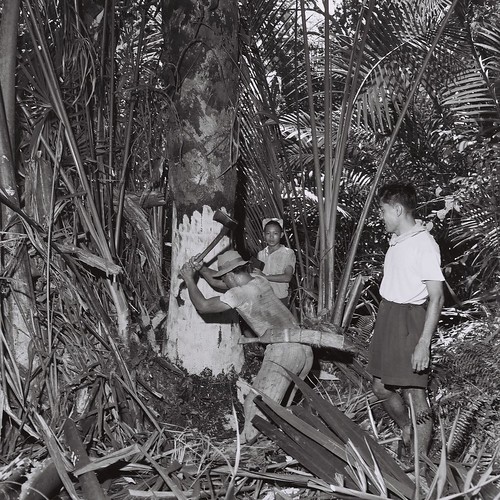
The Sago Palm is felled. Palms are felled just before flowering, when the stem are richest in starch. One palm yields 150 to 300 kg of Starch.
2. Marut (Shredding of Sago Pith)
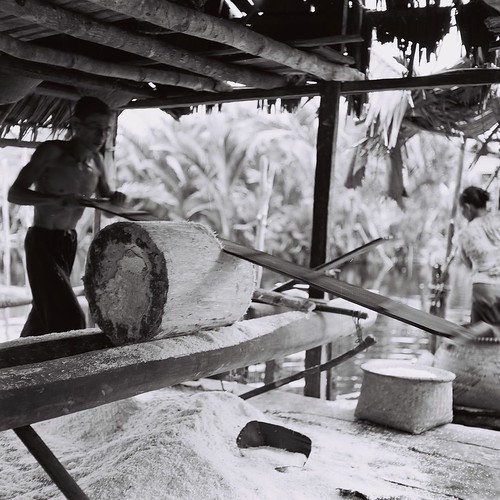
After removing the bark (Ungun) of the Sago Palm (Balau), the Sago Pith ( Sei Balau) will be placed on a Lagan. A Lagan is made of two tied logs with a small gap in between. A Shredder (Parut) will be then used to make Pou (shredded Sago Pith).
3. Menyak ( Extraction of Sagu Starch- Sei)
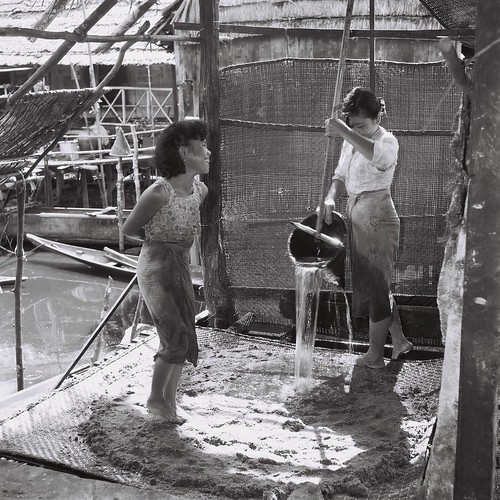
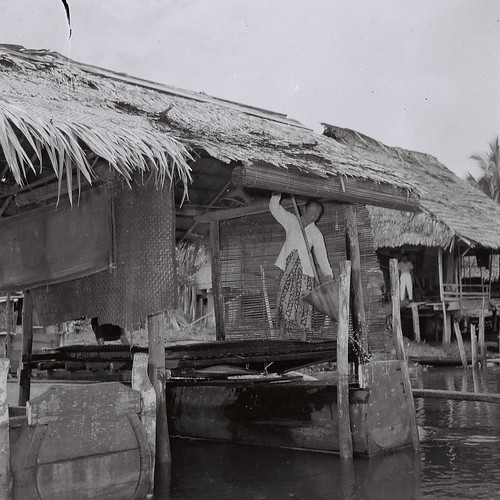
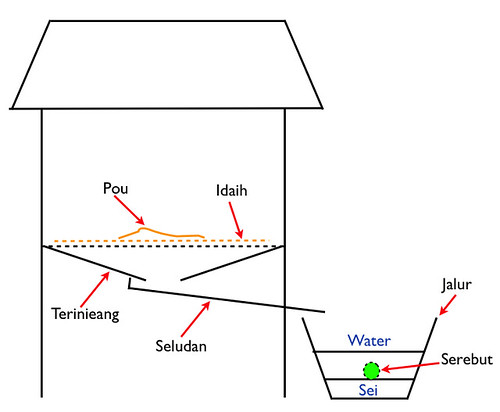
The Pou will be brought to the extraction house called Nyanan ( also known as Jagen). There the Pou will be placed onto an Idaih (a mat made of Nypa leaves).
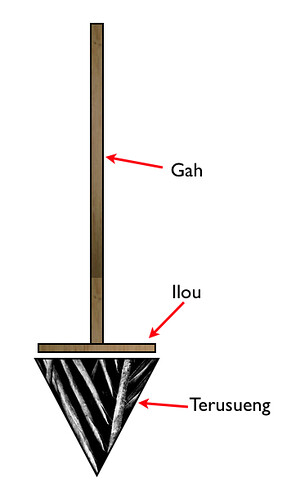
The Pou will be mixed with water from the river, which drawn up using a Terusueng (a conical bucket made of Sago Palm Frond- Ukap balau).
The extraction is done by trampling and kneading the wet Pou barefoot. This produces a mixture of water and raw sago starch (Sei). This mixture will be collected in a settling container called Jalur. After the Sei have settled on the bottom of the Jalur, a small hole at the end of Jalur known as Serebut will be opened to drain all the water out.
4. Mela'uek (Cleaning of Sei)
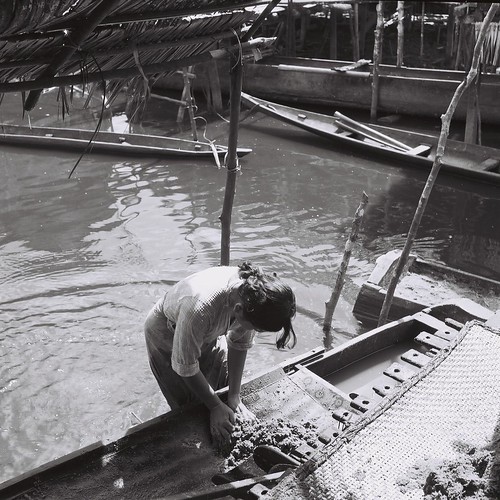
The Sei at the bottom of Jalur will be collected and placed on a Tapih (cheese cloth) which is placed on a Salui (boat). The Sei is washed and strained many times and any impurities will be removed.
5. Mengulud ( Kneading of ingredients for Sago Pearl )

The Raw Sago Starch (Sei) will be mixed with shredded Coconut (Benyuh Parut), rice bran (Dabou Padai) and salt to taste (Sia). The Mixture will be knead on a special Nypa mat called Kejangan. The Kneading process is done by rolling the mixture repeatedly on Kejangan. This Kneading process is called Mengulud.
6. Mengugoh ( A Process to pearl Sago Starch)
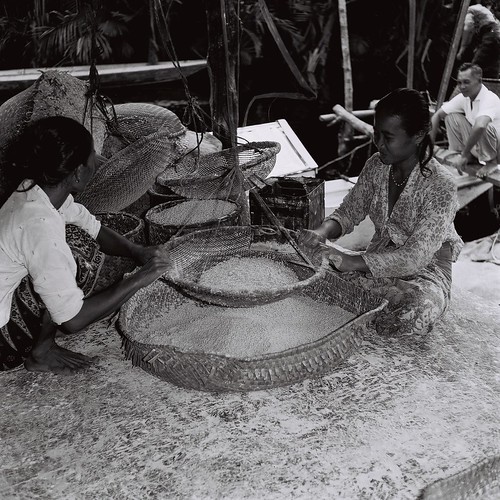
After Mengulud, the mixture will be sift (Mengugoh) using a Takueang (Colander) that is suspended by a rope. This forms the mixture into small round grain.
7. Mu'ui (Cooking of Sago Pearl)
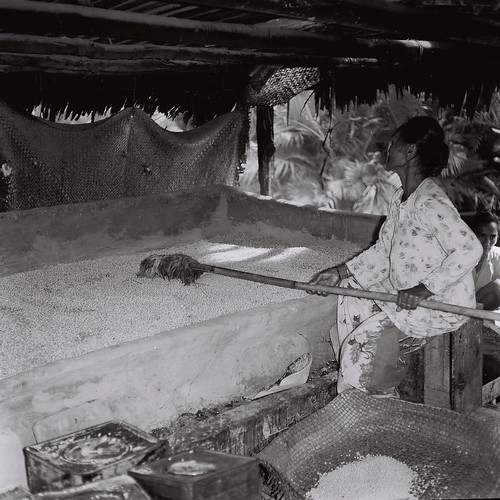
The raw sago pearl are cooked on an clay oven called Belanga. The raw sago pearls must be spread occasionally for them to cook evenly. The cooked Sago pearls are let to cool down and then stored in tight container. The end product look brownish and are called Sagok and can be eaten with smoked fish (Jekan Ipuong), Umai (raw fish salad) or with curry gravy (Keliseh).
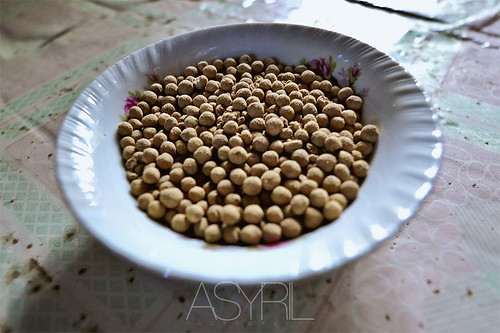
Seven Steps of Making Sagok
Kalau tidak dipecahkan ruyung, manakan dapat sagunya
Mun enda bibah Ungun, enda lah pekena sei
1. Tubeng Balau (Fell a Sago Palm)
Photo by: Souhusin- Album: Mukah Subet Sagok
The Sago Palm is felled. Palms are felled just before flowering, when the stem are richest in starch. One palm yields 150 to 300 kg of Starch.
2. Marut (Shredding of Sago Pith)
Photo by: Souhusin- Album: Mukah Subet Sagok
After removing the bark (Ungun) of the Sago Palm (Balau), the Sago Pith ( Sei Balau) will be placed on a Lagan. A Lagan is made of two tied logs with a small gap in between. A Shredder (Parut) will be then used to make Pou (shredded Sago Pith).
3. Menyak ( Extraction of Sagu Starch- Sei)
Photo by: Souhusin- Album: Mukah Subet Sagok
The Pou will be brought to the extraction house called Nyanan ( also known as Jagen). There the Pou will be placed onto an Idaih (a mat made of Nypa leaves).
The Pou will be mixed with water from the river, which drawn up using a Terusueng (a conical bucket made of Sago Palm Frond- Ukap balau).
The extraction is done by trampling and kneading the wet Pou barefoot. This produces a mixture of water and raw sago starch (Sei). This mixture will be collected in a settling container called Jalur. After the Sei have settled on the bottom of the Jalur, a small hole at the end of Jalur known as Serebut will be opened to drain all the water out.
Nyanan (Jagen)- Photo by: Souhusin- Album: Mukah Subet Sagok
Photo: Construction of a Nyanan (Jagen)
Photo: Construction of a Terusueng
4. Mela'uek (Cleaning of Sei)
Photo by: Souhusin- Album: Mukah Subet Sagok
The Sei at the bottom of Jalur will be collected and placed on a Tapih (cheese cloth) which is placed on a Salui (boat). The Sei is washed and strained many times and any impurities will be removed.
5. Mengulud ( Kneading of ingredients for Sago Pearl )

Photo: Two Ladies are doing the Mengulud process
The Raw Sago Starch (Sei) will be mixed with shredded Coconut (Benyuh Parut), rice bran (Dabou Padai) and salt to taste (Sia). The Mixture will be knead on a special Nypa mat called Kejangan. The Kneading process is done by rolling the mixture repeatedly on Kejangan. This Kneading process is called Mengulud.
6. Mengugoh ( A Process to pearl Sago Starch)
Photo by: Souhusin- Album: Mukah Subet Sagok
After Mengulud, the mixture will be sift (Mengugoh) using a Takueang (Colander) that is suspended by a rope. This forms the mixture into small round grain.
7. Mu'ui (Cooking of Sago Pearl)
Photo by: Souhusin- Album: Mukah Subet Sagok
The raw sago pearl are cooked on an clay oven called Belanga. The raw sago pearls must be spread occasionally for them to cook evenly. The cooked Sago pearls are let to cool down and then stored in tight container. The end product look brownish and are called Sagok and can be eaten with smoked fish (Jekan Ipuong), Umai (raw fish salad) or with curry gravy (Keliseh).
Thursday, February 10, 2011
Sharif Masahor - Melanau Knight Of Sarawak And Selangor by CAI
The Melanau have ruled the central of sarawak since time immemorial. Learn Melanau would like to share the story about a famous melanau warrior Shariff Masahor by CAI
Sayyid Mashhur bin Muhammad Al-Shahab -Sharif (or Syed) Masahor was one of the greatest Melanau warriors in the history of British-era Sarawak. He also played an important role in Selangor politics during the British era.
Sharif Masahor was of mixed Arab Syed (descendant of Caliph Ali and his wife Fatimah Zaharah) and Melanau ancestry and governed the Rejang River region [modern-day Sibu, Mukah, Sarikei, Kapit, Bintulu and Miri Divisions] of Sarawak during the days of Brunei rule in the 1840s.

Sayyid Mashhur bin Muhammad Al-Shahab -Sharif (or Syed) Masahor was one of the greatest Melanau warriors in the history of British-era Sarawak. He also played an important role in Selangor politics during the British era.
Sharif Masahor was of mixed Arab Syed (descendant of Caliph Ali and his wife Fatimah Zaharah) and Melanau ancestry and governed the Rejang River region [modern-day Sibu, Mukah, Sarikei, Kapit, Bintulu and Miri Divisions] of Sarawak during the days of Brunei rule in the 1840s.

Sayyid Mashhur bin Muhammad Al-Shahab (Sharif Masahor). Photo by : herworld-cheng.blogspot
Subscribe to:
Posts (Atom)


